
Slenderman Lost at School


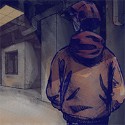














You start in a dim hallway of an empty school. The lights are mostly out, your only tools are the arrow keys and a mouse cursor for interacting with what you can reach, and somewhere in the building Slenderman is already moving. Nothing has happened yet. That is the exact moment Slenderman Lost at School hands you control and steps back.
| Setting | Abandoned school |
|---|---|
| Antagonist | Slenderman |
| Objective | Collect items, solve puzzles, escape |
| Controls | Arrow keys or WASD, mouse to interact |
| Core approach | Stealth over confrontation |
What Slenderman Lost at School Expects Before You Explore
The building is a maze of classrooms and hallways, and the game never hands you a map. Beginners tend to sprint from room to room hunting for the next item, which is exactly how most first attempts end: cornered in a hallway with Slenderman already closing in, because the running itself is what gave them away.
There is no combat here, so distance and cover are the only real defenses Slenderman Lost at School offers.
The better approach is slower. Crouching cuts down the noise you make, and learning which hallways loop back on themselves means you are never more than a few steps from somewhere to break line of sight. The items needed to eventually escape are scattered through these rooms, but you do not need every collectible in the school, only the specific ones tied to unlocking the exit, so a little restraint about what to chase goes further than speed.
- Crouch in open hallways to stay quieter.
- Learn dead ends before you need them as escape routes.
- Search a room fully before moving to the next one.
Sound Is Slenderman Lost at School's Real Warning System
What no description of the game quite captures is how much the audio design does the actual work. Footsteps, ambient creaks, and the shift in tone when Slenderman is nearby all register before anything appears on screen, and playing with the sound off turns this into pure guesswork.
That is also where the difficulty escalates. Early rooms give you space to retreat and recover if you are spotted. Later ones close that space down, so the stealth habits that felt optional at the start become the only thing keeping a run alive. Dying and restarting with better knowledge of the layout is often the fastest real progress, since the school's rooms stay the same each time, and every failed attempt teaches safer paths for the next one.
The puzzles themselves are simple by design, more about locating the right item for the right door than solving anything elaborate, which keeps the tension on evasion rather than logic. That is also the one thing you only notice by actually playing rather than reading about it: Slenderman rarely chases in a straight line, and he seems to reposition toward wherever you are least prepared for him.
No single tool point-and-clicks you to safety. Persistence in re-learning a layout after a jump scare sends you back to the start is the real skill being tested, more than any single puzzle inside the building.
Slenderman Lost at School is not trying to be a deep puzzle game, and it does not need to be. What it does well is make an empty school feel actively hostile, one crouched hallway at a time, until finally getting past the last locked door feels earned rather than handed to you.