
Beyond the Blight



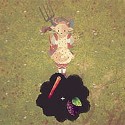



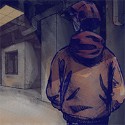









You step past the treeline and the air already tastes wrong. Beyond the Blight drops you into a forest poisoned from the inside out, a countdown to your own collapse ticking on screen, and nothing between you and that timer but whatever you can loot and upgrade in the corridors ahead. There's no safe tutorial room; you're already breathing the toxin from the first screen.
| Genre | First-person incremental dungeon crawler |
|---|---|
| Setting | A forest corrupted by the blight |
| Session Length | Roughly 30 minutes per run |
| Visual Style | 2.5D pixel art with layered lighting |
| Platform | Browser (HTML5) |
The Timer That Runs Beyond the Blight
The whole structure rests on one mechanic: you are temporarily immune to the poisoned air, and that immunity drains the entire time you play. Every corridor cleared, every chest looted, is weighed against how much countdown you can afford to spend. Standing still burns the same clock as moving forward.
New players misjudge this at first, treating early corridors like a normal dungeon crawler where exploring every corner costs nothing. It doesn't. The corridors hide coins and treasure that reward a quick sweep, but chasing all of them instead of pushing forward is the most common way a run ends early, timer exhausted, before a biome boss is in sight.
What you can't appreciate until you've died to the timer once is how differently the forest reads on a second attempt. Once you know roughly how far immunity stretches, the corridors stop feeling like an open dungeon and start feeling like a route you're optimizing.
Reading Weak Points Across the Forest
Combat isn't about outlasting enemies, it's about finding the exposed weak point on each one and hitting it before the timer makes the fight not worth finishing. Landing a hit there triggers a critical strike, turning a slow fight into a clean kill. Each biome brings its own enemies, and learning which weak point belongs to which monster is a skill nobody arrives with.
The temptation early on is to swing at whatever's in front of you, and that feels viable in the first biome. It stops working once tougher enemies show up with weak points that aren't obvious from the front, and players who never adjust their aim lose more time to fights than the loot was worth.
Auto-move and auto-attack options exist for anyone who'd rather focus on build decisions than manual aim, though leaning on them wastes time in low-value corridors a manual sweep skips. Weak-point knowledge still matters either way, since it's what decides how fast any given fight actually resolves.
Committing to a Skill Tree Instead of Scattering Loot
The skill tree is deep enough that no two runs build the same character, and it rewards commitment over variety. Beginners spread loot across unrelated skills instead of picking one direction, leaving them underpowered as difficulty ramps toward later biomes. The stronger approach is one weak-point damage style early, with every piece of loot feeding it.
Side corridors also hide small events and mini-games offering extra rewards for a short detour, and deciding whether one is worth the timer cost becomes its own calculation once you know what a detour usually costs.
- Players who enjoy optimizing a build from scratch each run get the most out of the skill tree.
- Players chasing a clean, fast clear lean on auto-attack and skip most side corridors.
- Sweep early corridors for coins, but stop once the return per second of timer starts dropping.
- Commit to one weak-point damage style as soon as the tree offers a direction.
- Save timer-risky detours for runs where the build is already strong enough to afford them.
None of this locks out later experimenting. A cleared run still leaves the next descent open to a different weak-point style, so switching things up costs nothing but a restart.
Where Beyond the Blight Still Shows Its Jam Roots
Beyond the Blight grew out of a shorter jam build before the longer playtest available now, and that history still shows. Some players have reported fullscreen toggling misbehaving on certain setups, and pacing between early corridors and tougher biomes can feel uneven, a stretch where difficulty spikes faster than the skill tree catches up. None of that breaks a run, but it's fair to know going in.
Whether the air kills you outright comes up constantly: it does, once immunity fully drains. Whether skills carry between runs is another common question: within the current build they don't, each descent starts the tree from scratch. And people ask whether the demon lord is fixed or random: it's the final battle the run is paced around, past the last biome.
Players new to incremental crawlers sometimes expect the genre's usual safety net of grinding indefinitely. Refusing that expectation is exactly what makes the timer feel dangerous rather than decorative.
Beyond the Blight earns its tension from a clock you can't pause, and the run that finally reaches the demon lord with seconds of immunity to spare feels earned rather than lucky. It's an unglamorous horror: not a monster chasing you, just air you can't breathe forever.