
Five Nights at Chuck E. Cheese's
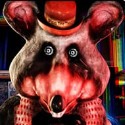
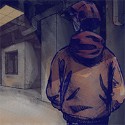






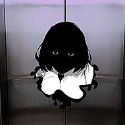








What happens when you stop checking the cameras in Five Nights at Chuck E. Cheese's for even a few seconds? The dining room empties, a door creaks somewhere off-screen, and by the time you flip back to the show stage one of the animatronics is already gone from its mark. Five Nights at Chuck E. Cheese's puts you in the office chair of Fred Andrews in 1979, hired to watch the restaurant overnight while it sits closed ahead of a refurbishment. The building is quiet except for the hum of the monitor bank, and that quiet is the whole problem.
| Setting | Chuck E. Cheese's, 1979 |
|---|---|
| Role | Night watchman (Fred Andrews) |
| Core Mechanic | Camera surveillance, malfunctioning animatronics |
Fred Andrews and the Night Shift in Five Nights at Chuck E. Cheese's
Fred Andrews isn't a security guard by trade in Five Nights at Chuck E. Cheese's — he's the guy who took the job because the restaurant needed someone in the building before the refurbishment crews could start. That framing matters more than it looks like at first. You're not defending a functioning business with a routine; you're babysitting a building that's already halfway between what it was and what it's about to become, and the animatronics inside haven't been told that yet.
The job description is simple: watch the cameras, keep track of where things are, and don't let anything reach the office. Five Nights at Chuck E. Cheese's doesn't give Fred any tools beyond the camera feed itself, which is exactly why the game feels tighter than it looks in a screenshot. There's no flashlight to wave around, no map full of icons — just a grid of rooms you have to mentally stitch together while something in one of them is no longer where it was a minute ago.
New players tend to treat the first night like a tutorial they can coast through, and Five Nights at Chuck E. Cheese's punishes that assumption early. The malfunctions aren't random noise the game throws at you to look spooky; they're the actual pacing mechanism. Missing one early rotation through the cameras is the difference between catching a problem at the dining room and catching it at your own door.
Reading the Cameras Instead of Reacting to Them
The animatronics in Five Nights at Chuck E. Cheese's don't rush you in a straight line. They move between fixed points on the camera grid, and the real skill the game is testing is whether you notice a room has changed state before you need that room to still be safe. Once you've sat through a full night, you stop clicking through cameras in order and start checking the specific rooms that matter for wherever you are in the shift — which is the point where the game stops feeling like guesswork.
By the time you reach the later nights, the malfunctioning animatronics aren't behaving like they did on night one. Early on, a single pass through the camera rotation is usually enough to keep tabs on everything. Later, that same rotation speed leaves gaps, and players who haven't adjusted their checking rhythm get caught by something that was two rooms closer than they expected.
One thing that only becomes obvious after a few playthroughs: the game telegraphs a coming problem through small, easy-to-miss details on the camera feed itself — a shift in a room's static, an animatronic's pose looking slightly off from its usual idle. It's the kind of detail a walkthrough can tell you exists, but it doesn't really register as useful until you've already been caught by it once.
Five Nights at Chuck E. Cheese's and the "1979 Setting" Debate
A fair chunk of the discussion around Five Nights at Chuck E. Cheese's isn't about jumpscares at all — it's about whether the 1979 setting actually changes anything mechanically or if it's purely flavor layered onto a familiar camera-survival loop. Some players lean into the period setting as the whole appeal, since it gives the malfunctioning-animatronics premise a grounded, almost-believable reason to exist instead of a vague supernatural one. Others find the setting mostly cosmetic once you're a few nights in and the core loop is just you against the clock and the camera grid. That split is worth knowing going in, because it shapes what you'll actually get out of the game depending on which side of it you care about.
- Players who like methodical pattern-reading tend to get the most out of the early nights, where the malfunction routes are still learnable.
- Players chasing pure tension gravitate toward the later nights, where the margin for error on camera checks gets thin enough to feel like genuine pressure.
- Camera rotation speed, not reaction time, is the main skill Five Nights at Chuck E. Cheese's is actually testing.
- The refurbishment framing gives Fred Andrews a reason to be alone in the building that the usual "night guard" setup doesn't bother explaining.
Frequently Asked Questions
- Is Five Nights at Chuck E. Cheese's the same as the original Chuck E. Cheese's fan games from years earlier? No — this version is a rebuilt take on an earlier fan game, redone from the ground up rather than patched, which is why the camera systems and pacing feel more deliberate than a straight port would.
- Do you ever leave the office in Five Nights at Chuck E. Cheese's? No. Fred Andrews stays at the desk for the entire shift; every interaction with the building happens through the camera feed, which is part of why reading those feeds correctly matters so much.
- Does the refurbishment ever show up in the gameplay itself? It shows up as atmosphere more than mechanics — exposed sections of the dining room and show stage reinforce that the building is mid-transition, which is part of why it feels less like a normal operating restaurant than most games in this genre.
Five Nights at Chuck E. Cheese's earns its tension from something simpler than most games in its genre bother with: a night watchman, a camera grid, and a building that was never supposed to be occupied this late. Fred Andrews doesn't get a weapon or a trick to lean on, just the judgment to know which rooms on that camera feed actually need his attention right now — and that's still the thing that decides whether he makes it to morning.